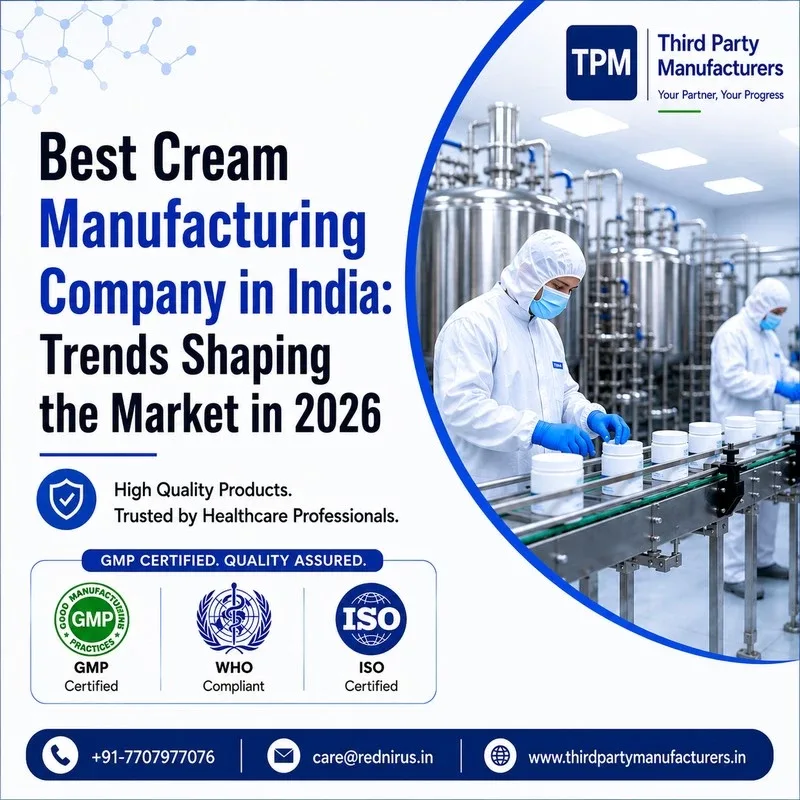
The best cream manufacturing company in India pairs modern manufacturing and proper quality standards with fresh formulations to keep up with rising demand. In 2026 the big trends are natural ingredients and private label production made to order, along with greener packing and tighter quality compliance. These help brands launch safe creams that work and can hold their own on the shelf.
Cream manufacturing companies in India are in for a big shift in 2026. Buyer demand is changing, R&D is moving ahead and export openings keep growing. Skin care creams or pharma grade creams, Indian makers have already made a name worldwide. More of them are putting money into plants that meet international norms. WHO-GMP and ISO certificates are now common. Demand is rising for face cream specialists, herbal skin care and medical grade topical creams, so the market keeps getting bigger. Third party manufacturers let a business grow its output without spending heavily on a plant. Below we look at where the Indian cream market is heading, and what to check before you tie up with a maker here in 2026.
Why is India Becoming a Global Hub for Cream Manufacturing Companies?
Several things make India a good base for cosmetic and pharma products. Costs are low. Skilled chemists and formulators are easy to find, and raw material supply is steady. Leading Antifungal Cream Manufacturers in Himachal Pradesh, Uttarakhand, Maharashtra and Gujarat follow the required regulations, so clients get dependable service.
Skin cream makers now produce newer lines too: anti-ageing and brightening creams, sun protection creams, medicated creams. Demand from Africa, South-East Asia, the Middle East and Europe has pushed Indian units to set high quality standards.
Key Drivers Behind the Growth of Beauty Cream Manufacturers in India
Right now Beauty Cream Manufacturers in India have everything going for them at once. People care more about their skin. The middle class keeps growing, organic skin care is popular worldwide, social media pushes new products every day and dermatologists are recommending creams more often.
How are Third Party Manufacturers Transforming the Cream Industry in 2026?
Contract makers matter as much now as ever. More brands outsource now, especially start-ups and franchises but regional distributors as well, to save money and reach the market sooner. A capable contract unit handles it all: formulation and documentation, pack development, quality testing.
Pharma contract manufacturing has also joined up cosmetic creams and medicated ones. Brands making antifungal, steroid or pain relief creams get them produced under Schedule M of the DCGI (Drug Controller General of India) when they work with third party pharma makers.
Advantages of choosing a 3rd party pharma manufacturing partner
- Lower capital investment, with access to WHO-GMP certified plants
- Faster launches, since the manufacturing setup is ready to use
- Freedom to raise or cut volumes as the market moves
- An experienced team of R&D scientists and quality control staff
What Innovations Are Face Cream Manufacturers Bringing to the Market?
New ideas will keep Face Cream Manufacturers ahead through 2026. Nano encapsulation, microbiome friendly formulas and AI driven skin profiling have already changed how face creams are made and sold. Indian units are picking up these technologies to make creams for the mass market and for premium dermatology buyers alike.
SPF day creams sell well. So are anti-wrinkle creams with peptides and Ayurveda based brightening creams. Makers now offer products that can be tailored to each brand. Transparency matters more than before, along with sustainable sourcing and an accurate label on every tube and jar.
How Does Pharmaceutical Third Party Manufacturing Benefit Cream Brands?
Pharmaceutical Third Party Manufacturing makes it easy for cream companies to bring out medicated and quasi-medicated products without a plant of their own. A reputable contract medicine maker handles the whole chain. It buys raw material, works out the formula and runs the quality tests, then does the documentation and ships the goods.
If you're launching a new derma PCD range, we'd strongly suggest hiring a cream company that also offers third party pharma manufacturing.
What are the Important Factors to be Considered while Hiring a Beauty Cream Manufacturer in India?
Don't rush this choice. Domestic company, exporter or PCD franchise, these points tell you how capable a beauty cream maker really is:
- WHO-GMP and ISO certification for the production plant
- In-house R&D for custom formulation work
- Open sourcing of raw material and proper COA documents
- Flexible MOQs and room to scale capacity
- Many cream types on offer, cosmetic and Ayurvedic as well as pharma creams
- Proven experience with regulatory filings for CDSCO, the EU or other export markets
Skin cream makers and beauty focused plants in pharma clusters such as Baddi in Himachal Pradesh or Haridwar in Uttarakhand tend to have strong compliance. That makes them good candidates if quality is your first concern.
Which Trends Are Redefining the Future of Cream Manufacturers in India?
A few major trends are shaping the industry in 2026. Sustainability comes first, and it is no longer just a word on the carton, since buyers abroad now ask for proof of how the cream was made and packed before they place an order. Many Cream Manufacturers now use greener packing, make eco-friendly products or run production with a smaller carbon footprint. Vegan creams are another trend. Cruelty free and fragrance free ones too.
Digitisation is the next one. Quite a few contract makers now run ERP software with live batch tracking and digital quality control, which makes their operations smoother and far more transparent. Their capability has grown so much that multinational companies have started working with Indian cream makers.
Frequently Asked Questions (FAQs)
Q1. What is the difference between Cream Manufacturing Company and Third Party Manufacturers?
Ans: A cream company sells under its own brand. Third party makers produce for other brands. A brand that partners with a third party maker can launch through a WHO-GMP certified plant without building one.
Q2. How do you maintain product quality in Third Party Manufacturing of pharmaceutical products?
Ans: Every process follows DCGI rules, along with Schedule M and WHO-GMP guidelines. Each batch gets quality control tests before shipment, after proper stability studies and a check of the COA reports.
Q3. What are the reasons to work with Indian Face Cream Manufacturers as my Third Party Manufacturer for Private Label products?
Ans: They offer good quality and advanced formulas at affordable cost. They also know how to make both cosmetic and pharma creams.
Conclusion
Indian cream manufacturing is in an exciting phase in 2026, because pharma skills and cosmetic know-how have come together with 3rd party manufacturing. Many companies now turn first to Indian makers, whether they want a face cream specialist, a skin cream unit or a partner for 3rd party pharma work.
If you're looking at third party pharma manufacturing, or want a trusted beauty cream source for your private label, pick a cream company with proper certificates and real experience. It should keep bringing new ideas too. Indian contract makers, including Third Party Medicine Manufacturers, have what it takes to meet the market's growing demand for cream products.
Sustainability is growing. So is digitisation, and herbal ingredients are finding their way into more creams. That makes 2026 the right time to partner with a maker who can meet your needs.
Must read this next Guide to Finding Best Pharma Tablet Manufacturing Company in India
Why is India Becoming a Global Hub for Cream Manufacturing Companies?
There are various factors responsible for making India an ideal country for the production of cosmetic and pharmaceutical products. These include affordable costs associated with production, availability of skilled professionals such as chemists and formulators, and efficient supply of raw materials.
Best Cream Manufacturing Company in India combines advanced manufacturing, quality standards and innovative formulations to meet growing market demand. In 2026, key trends include natural ingredients, customized private label production, sustainable packaging and stricter quality compliance, helping brands launch safe, effective and competitive cream products. The landscape of cream manufacturing companies in India will witness a tremendous change in 2026 due to various factors including consumer demands, advanced research and development, and export possibilities. From skincare creams to pharmaceutical grade creams, the manufacturing industry of India has made its mark across the globe. Ind...
Key takeaways
- Why is India Becoming a Global Hub for Cream Manufacturing Companies?
- Key Drivers Behind the Growth of Beauty Cream Manufacturers in India
- How are Third Party Manufacturers Transforming the Cream Industry in 2026?
- What Innovations Are Face Cream Manufacturers Bringing to the Market?
- How Does Pharmaceutical Third Party Manufacturing Benefit Cream Brands?
- What are the Important Factors to be Considered while Hiring a Beauty Cream Manufacturer in India?
How to order Best Cream Manufacturing Company in India: Trends Shaping the Market in 2026
- Define the product Fix the composition, dosage form, pack size, quantity and your brand name.
- Shortlist manufacturers Compare WHO-GMP certification, product permission, capacity and location.
- Compare quotations Ask for the per-unit rate, MOQ, lead time and packing material cost in writing.
- Approve artwork and sample Finalise label, carton and MRP, and approve the pre-production sample.
- Receive your batch Pay the agreed advance and receive goods with invoice and certificate of analysis.