The way medicines get made is changing fast, and pharma 3rd party manufacturing sits right at the centre of that change. The model lets a pharma company stick to what it does best and hand production over to specialised 3rd party manufacturers. Anyone with a stake in this trade will need to understand where it is heading and what it means for them.
What is 3rd Party Pharma Manufacturing?
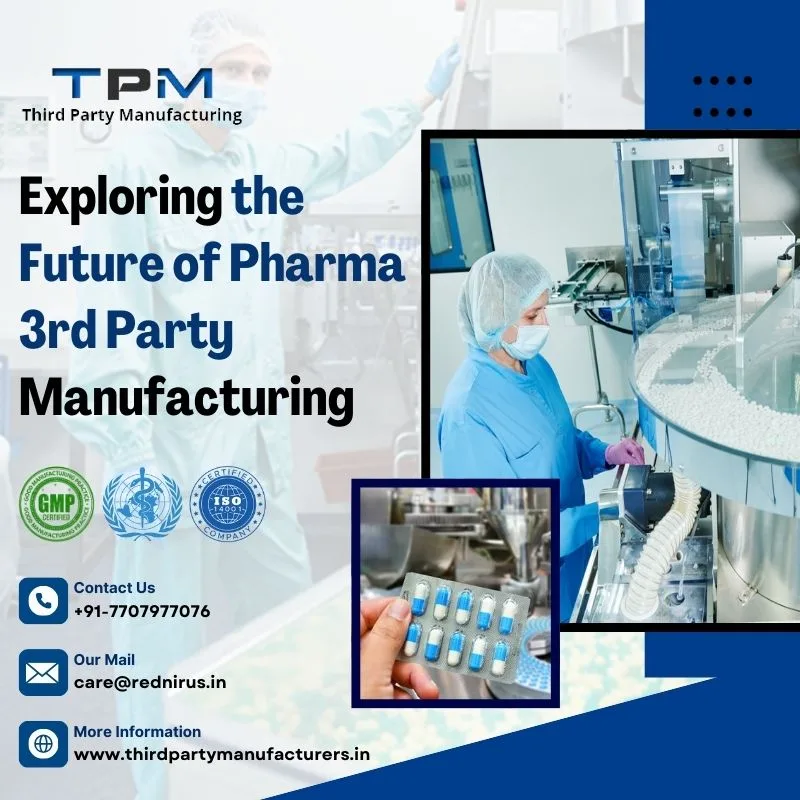
Third Party Manufacturing is a model where a pharma company outsources its manufacturing to a specialist maker. The company keeps its attention on R&D and marketing, plus distribution. Production of every tablet, capsule or syrup batch is the contract unit's job.
What are the benefits of Third Party Manufacturing?
Here are the main benefits of working this way.
- Low costs. Cost saving is probably the biggest plus. When you outsource, you skip the capital spend of building and running a plant, and that money can go into R&D and other areas that need it.
- Scalability and flexibility. Demand goes up and down, and production has to follow it. A contract partner lets you react quickly to such changes without taking a heavy financial hit.
- Access to expertise. Many contract units have special know-how in particular areas, biologics or complex formulations for example. That can lift both product quality and compliance.
- Speed to market. Time is money in this business. A contract maker already has tuned production processes and shorter lead times, so your product reaches the market sooner.
Why Is Pharma 3rd Party Manufacturing Growing?
It's growing because it is efficient and it scales. But what makes it the first choice for so many pharma businesses?
Cost Efficiency
The contract unit brings the facility and the machines, and the labour too, so your costs drop. Even small pharma companies can launch a tablet or syrup range this way without a massive investment.
Use of Sophisticated Technology
The leading Third Party Pharmaceutical Manufacturing companies spend heavily on modern technology and equipment. Partner with one and you get access to advanced processes, which shows in the quality of the finished product.
Focus on Core Competencies
Once production is outsourced, a pharma company can work from its real strengths. Marketing. Branding. R&D. The contract maker takes care of the plant.
Regulatory Expertise
Many contract units know regulatory compliance inside out, from GMP norms to drug licence paperwork. So they follow local and international rules as a matter of routine.
Future Trends in 3rd Party Pharma Manufacturing
Looking ahead, a handful of trends will likely shape how contract pharma manufacturing grows.
Technological Innovations
AI and machine learning are changing how contract pharma units run, and so is automation. Costs come down. Each batch takes less time on the line. Two examples follow.
Drug Discovery
AI speeds up drug discovery by going through huge datasets to spot likely candidates much faster than a team of people could manage by hand.
Automation in Production
Robots and automated systems reduce human error. Accuracy goes up.
Medicine is Personalization
Personalised medicine is shifting the way production is planned. As treatments get matched more closely to each patient, 3rd Party Manufacturers are adjusting by putting more weight on small-batch production for particular patient groups or cases.
Sustainability Efforts
People are more aware of ecological issues now, and sustainability matters more to pharma companies than it used to. Forward-looking contract units are cutting waste and their carbon footprint as part of a green approach. It helps their reputation with buyers, and it is good for the environment too.
Improved Supply Chain Security
Digital supply chains bring both opportunities and problems. To keep sensitive data safe and hold on to trust, many contract manufacturing companies are putting strong cybersecurity in place, and some use technology like blockchain for more transparency and security in the chain.
What are the Challenges in Pharmaceutical Third Party Manufacturing?
The model has clear merits. It still comes with its share of problems:
- Quality control issues. Quality can differ from one maker to the next. Companies have to check that their partner sticks strictly to every quality control standard.
- Intellectual property risks. There's a risk of IP infringement or misuse of products made outside, right down to the label and artwork. Formulas and processes are private property, and that doesn't change when someone else makes the medicine.
- Different rules in different places. Every region has its own regulatory requirements. This can make international tie-ups with contract units tricky.
How to Use 3rd Party Manufacturing Positively?
If you want the most out of a tie-up with 3rd Party Pharma Manufacturing Companies, keep these points in mind:
- Proper vetting. Do thorough due diligence before you pick a manufacturing partner. Look hard at what they can make, their track record and their compliance history.
- Clear communication channels. Set up a proper way of talking so that expectations and timelines stay aligned, along with the quality standards for each batch.
- Routine audits and inspections. Audit the processes and facilities regularly against the quality standards.
- Two-way relationships. Build a real partnership with the maker instead of a plain vendor contract. That tends to bring out new ideas and better problem-solving.
All of this will drive the model forward. New technology, a sharper focus on sustainability and the rising need for personalised medicine will keep pushing pharma companies towards it. Working alongside contract units, they'll run more efficiently with lower operating costs and better access to specialised resources.
Conclusion
Pharma manufacturing is changing, and strategic partnerships with capable 3rd party manufacturers will keep its future alive. Companies that accept these changes will be better placed to meet growing global health demand, not just stay in the race.
Related Blogs!
What is 3rd Party Pharma Manufacturing?
Third Party Manufacturing is a model that involves the pharma company outsourcing its manufacturing to a specialist manufacturer. Through this, firms will be able to prioritize core competencies, for instance, R&D, marketing, and distribution, while outsourcing to the 3rd party manufacturers on matters of production.
Pharma manufacturing landscape is dramatically changing with the increasing trend of 3rd party manufacturing. This aspect essentially enables any pharma company to strengthen its core competencies and outsource the necessary production to any specialized 3rd party manufacturers. Therefore, in the future, it would be vital for any stakeholder in this industry to understand the trends and implications of such 3rd party pharma manufacturing. Third Party Manufacturing is a model that involves the pharma company outsourcing its manufacturing to a specialist manufacturer. Through this, firms will be able to prioritize core competencies, for instance, R&D, marketing, and distribution, while outsour...
Key takeaways
- What is 3rd Party Pharma Manufacturing?
- What are the benefits of Third Party Manufacturing?
- Why Is Pharma 3rd Party Manufacturing Growing?
- Future Trends in 3rd Party Pharma Manufacturing
- What are the Challenges in Pharmaceutical Third Party Manufacturing?
- How to Leverage 3rd Party Manufacturing Positively?
By the numbers
- India is the largest provider of generic medicines globally — IBEF
- India has the highest number of US-FDA compliant manufacturing facilities outside the United States — Invest India, Government of India
How to order Exploring the Future of Pharma 3rd Party Manufacturing
- Define the product Fix the composition, dosage form, pack size, quantity and your brand name.
- Shortlist manufacturers Compare WHO-GMP certification, product permission, capacity and location.
- Compare quotations Ask for the per-unit rate, MOQ, lead time and packing material cost in writing.
- Approve artwork and sample Finalise label, carton and MRP, and approve the pre-production sample.
- Receive your batch Pay the agreed advance and receive goods with invoice and certificate of analysis.