A Derma Manufacturing Company is a big name behind good skin care and dermatology products in the healthcare trade. Demand for skin care and cosmetic products keeps rising, so most pharma firms want a maker that takes quality seriously. One certified under WHO & GMP gives you a safe, clean and regulated plant to work with.
Your choice of plant decides how your skincare brand does. Everything hangs on it, from the quality of each tube of cream and the way the gel feels on the skin to how safe the product is and how long the label claims will hold up once the batch sits on a chemist's shelf through a hot summer. Good Derma Products Manufacturers bring better formulas and modern production lines, backed by strict quality approval. In this post we look at why a reliable dermatology partner makes sense if you want to grow in skincare.
What is a Derma Manufacturing Company and Why Is It Important?
It's a pharma company that makes dermatology and skincare products. Think creams, lotions, gels, ointments, face wash, medicated solutions and plenty more. These units work to tight quality limits so the products are safe and actually work on the skin.
Demand is rising. People now pay more attention to skin health, and both cosmetic and medical skin treatments are selling better than before. So distributors and entrepreneurs, along with many pharma companies, lean on professional makers to build their skincare range.
A trusted Derma Manufacturer brings advanced formulas and modern machines, plus trained people who keep quality steady. Each batch is made to meet domestic as well as global quality norms.
These makers also carry products for acne, pigmentation, fungal infections, dry skin and signs of ageing. Tie up with one and you can widen your range without building a plant of your own.
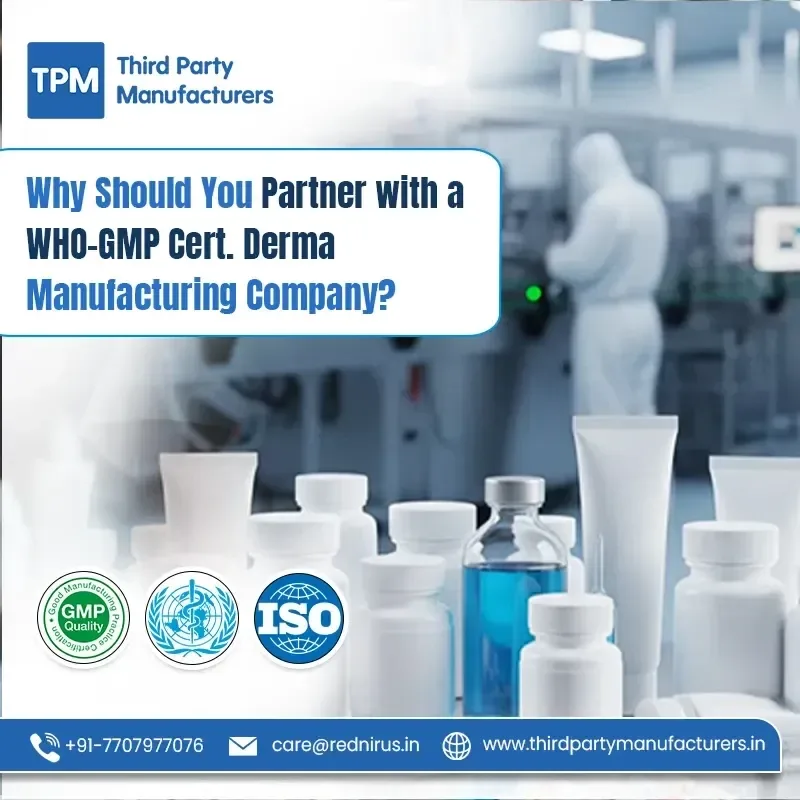
Why Should You Partner with a WHO-GMP Certified Derma Manufacturer?
Certification and quality norms come first when you pick a derma manufacturing unit. A WHO-GMP certified unit follows manufacturing practice accepted worldwide, and that is your assurance on product quality and safety.
Reliability is the biggest gain. Hygiene, quality and safety are built into how the products are made, so product failures stay rare and customers keep their trust.
Infrastructure is the next plus. A professional Skin Care Manufacturing Company runs modern equipment that can turn out all kinds of dermatology formulas. That lets a pharma company try new skincare ideas in the market.
Batch to batch, quality stays the same. Nothing leaves untested. That protects your brand's name, and it keeps buyers happy, because a doctor who has prescribed your cream once and seen it work will write it again only if the next strip, tube or pack behaves exactly like the first one did.
Many of these companies also help with regulatory work, so partners can meet industry norms and legal rules. Setting up and selling a skincare line gets much simpler that way.
How Does Derma Third Party Manufacturing Help Businesses Grow?
Outsourced derma production is one of the most marketable models in pharma and cosmetics today. A company simply hands the making of its dermatology products to a reliable maker.
The maker runs production. You sell.
Cost is the first big win of third party derma manufacturing. Putting up a unit means heavy spending on machinery and infrastructure, and on skilled labour on top of that. Outsource, and that money goes into marketing and brand building instead.
Launches are faster. Established makers already have the plant and ready formulas, so a new cream or gel can reach the market in a short time instead of waiting a year or more for your own plant, its drug licence and its first trial batch.
Working with professional Skin Care Products Manufacturers also opens up a broad choice of dermatology formulas. You can diversify your list and serve many kinds of customers.
What Products are Offered by Skin Care Products Manufacturers?
These makers produce a long list of dermatology and cosmetic products, used for medical treatment as well as personal skin care.
Some examples: medicated creams for fungal infections, anti-acne gels, moisturising lotions, face serums, sunscreens and anti-ageing products. You'll find them in dermatology clinics and pharmacies, and in cosmetic shops as well.
A good Derma Products Manufacturer focuses on safe, effective formulas for different skin problems. Everything is made to a high standard and tested well before it reaches the customer.
Several units also make custom formulas to match market trends and what the client asks for. A brand can then come out with its own skincare products that hold their ground against the competition.
Packing and label design options are usually on offer too. So the product that reaches the shelf is quality assured from tube to carton.
How to Choose the Right Derma Manufacturing Company in India?
Picking the right maker is a big step for any skincare business. How reliable they are, and the standard of quality they keep, will go a long way in deciding whether your product line succeeds.
Start with paperwork. Check that the company is certified as WHO and GMP and holds the other regulatory approvals that apply. That tells you the maker follows the right quality rules.
Then look at the experience and skill of the Derma Products Manufacturer. An established one will have trained staff and modern facilities, and a solid product list to show.
Range matters. A unit with a big spread of dermatology products, say a sunscreen, a face wash, a serum and a lotion on top of the usual cream and ointment list, makes it far easier to grow your brand later without switching suppliers.
Check quality control. Reliable makers run several tests during production so the product is safe and consistent.
Then pick a partner who communicates clearly and delivers on time. Good service after the order is placed counts for a lot.
FAQs
Q1. What Does a Derma Manufacturing Company Do?
Ans: It makes dermatology and skincare items like creams, lotions, gels and ointments, used to treat skin conditions or for cosmetic needs.
Q2. What is the Derma Third Party Manufacturing?
Ans: It's a business model where a company outsources the making of its dermatology products to a professional maker and spends its own effort on marketing and distribution.
Q3. Why Choose a WHO-GMP Certified Skin Care Manufacturing Company?
Ans: A unit certified to ISO, WHO and GMP standards gives you quality production with proper safety and hygiene, and that builds confidence in the market.
Must Read: Why Third Party Manufacturing Products are in High Demand Across India?
What is a Derma Manufacturing Company and Why Is It Important?
A Derma Manufacturing Company is a pharmaceutical company that deals in the manufacturing of dermatology and skincare products like creams, lotions, gels, ointments, face wash, medicated solutions and many more. Such companies work under stringent quality parameters to provide safe and effective products for the purpose of skin care treatments.
Derma Manufacturing Company is quite a significant player in the manufacture of skin care and dermatology products of high quality in the healthcare sector. As the demand for skin care solutions and cosmetic products increases, most pharmaceutical companies would like to partner with companies that show a commitment to producing quality products. A manufacturer that has been certified by WHO & GMP guarantees that the environment is safe, hygienic and regulated. The quality, safety, and success of your skincare brand are the direct outcomes of the selection of the manufacturing partner. Derma Products Manufacturers have superior formulations, state of the art production plants, and stringent...
Key takeaways
- What is a Derma Manufacturing Company and Why Is It Important?
- Why Should You Partner with a WHO-GMP Certified Derma Manufacturer?
- How Does Derma Third Party Manufacturing Help Businesses Grow?
- What Products are Offered by Skin Care Products Manufacturers?
- How to Choose the Right Derma Manufacturing Company in India?
How to order Why Should You Partner with a WHO-GMP Cert. Derma Manufacturing Company?
- Define the product Fix the composition, dosage form, pack size, quantity and your brand name.
- Shortlist manufacturers Compare WHO-GMP certification, product permission, capacity and location.
- Compare quotations Ask for the per-unit rate, MOQ, lead time and packing material cost in writing.
- Approve artwork and sample Finalise label, carton and MRP, and approve the pre-production sample.
- Receive your batch Pay the agreed advance and receive goods with invoice and certificate of analysis.