The pharma trade has changed a lot over the past decade. Demand keeps climbing, regulators are stricter and everyone is under pressure to hold costs down. Third Party Contract Manufacturing is one of the approaches that has worked best for Indian pharma companies through all of this. The idea is plain. A manufacturing unit makes the products, while the pharma company spends its time on marketing and building the brand.
This post explains how contract manufacturing runs in the pharma sector, what the main benefits are and why more companies now go to Third Party Manufacturers for their stock.
What is Third Party Contract Manufacturing?
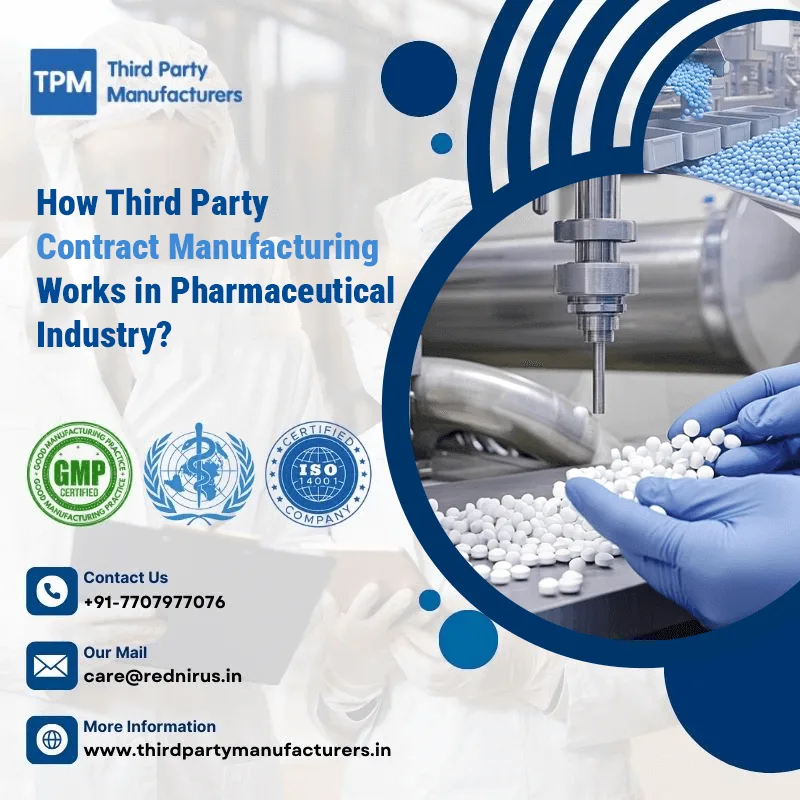
A company hands the making of its medicines to another firm that runs a plant. That's it. The Third Party Manufacturing Pharma Company is responsible for producing the products to the specifications the client gives, and the client then markets and distributes them under its own brand name.
Startups like this setup. So do small and mid-sized pharma firms and marketing companies that want to add more products to their list without sinking big money into a factory.
How Does the Pharma Contract Manufacturing Process Work?
In practice, Pharma Contract Manufacturing usually moves through these stages:
1. Product Finalization
First you decide what you want made. That means picking the formulation and composition, the dosage form (tablets, capsules, syrups, ointments and so on) and the packing details.
2. Third Party Manufacturer Selection
Next you pick a reliable Third Party Manufacturing Pharma Company. It should follow GMP (Good Manufacturing Practices) and hold the certificates you need, such as WHO-GMP, ISO or DCGI.
3. Quotation and Agreement
Once you've chosen the plant, the two sides settle the terms. Product price, MOQ, delivery time, packing preference and payment terms all get fixed here. Then a legal contract is signed.
4. Documentation and Product Approval
Paperwork comes next. The client sends its drug licence and GST registration along with marketing authorisations and the product formulations. The Contract Manufacturing Companies then prepare samples and get approval from the relevant authorities.
5. Production and Quality Control
Once a batch is made, the QA and QC teams test it. They check its quality and confirm it meets the regulatory standard before anything moves.
6. Packaging and Delivery
Stock that clears the checks is packed with the client's label and branding. After packing, it's shipped to wherever the client wants it.
What are the Advantages of Third Party Contract Manufacturing in India?
1. Economies of Scale
You don't spend capital on a plant, machines or a factory workforce. Subcontracting the production takes care of all that.
2. Concentration on Core Functions
Distribution and marketing firms can put their full effort into promotion and expansion. The contract unit looks after production.
3. High Scalability
Third Party Manufacturers let you scale up or down. If the market wants more, you raise the batch size; if sales slow, you cut it.
4. Compliance with Regulations
Pharmaceutical Contract Manufacturing Companies run modern facilities and keep to international quality norms, so a big part of the regulatory load is lifted off the client company.
5. Time-Saving
The plant and the trained people are already there. So a contract maker can produce and dispatch quickly, and you reach the market sooner.
Selecting the Right Pharmaceutical Contract Manufacturing Partner for Your Brand
Before you finalise a Third Party Manufacturing Pharma Company, look at these points:
- Certifications (GMP, WHO & ISO)
- Product range and specialisation
- Infrastructure and technology
- Quality assurance and testing facilities
- What past clients say about them
- Compliance with regulatory norms
Get this choice right and it does a lot for your brand in a market as crowded as pharma.
Future of Contract Manufacturing in Pharma
Demand is growing for generic medicines and OTC products, and for speciality formulations as well, which makes the outlook for Pharmaceutical Contract Manufacturing very bright. Contract units are putting money into automation, better quality control and flexible batch manufacturing so they can keep up with what the trade needs.
Multinational pharma companies are also working more with Indian Contract Manufacturing Companies. The pull is lower cost and good technical know-how, backed by strict regulatory conditions here.
FAQs On Third Party Contract Manufacturing in Pharma
Q1. Who can avail pharmaceutical contract manufacturing?
Ans 1: Anyone who holds a valid licence and GST registration can get medicines made under their own brand name by Pharmaceutical Contract Manufacturing Companies. That includes pharma startups and PCD companies as well as marketing firms.
Q2. What are the documents necessary for third party manufacturing?
Ans 2: You'll usually need:
- Copy of drug licence
- GST certificate
- Company profile
- Signed agreement
- Product composition and labelling details
Q3. Can one trust third party manufacturers safely?
Ans 3: Yes. If you work with reputed, certified Third Party Manufacturers, the process is safe and it works well. Just check their certificates and track record first, and see that they're in good standing with the regulators.
Q4. What kind of products can be produced via contract manufacturing?
Ans 4: Pretty much every kind of pharma product: tablets, injections, capsules, creams, ointments, suspensions, protein powders and many more.
Conclusion
Contract manufacturing is what lets pharma companies grow their volumes at an affordable cost without a big spend on a manufacturing setup. Work with experienced, compliant Pharma Contract Manufacturing Companies and you can count on good quality, proper compliance and stock that arrives on time. Operating costs drop. Your team gets to focus on marketing and growth. And as buyers ask for better products, this model stays a practical, scalable answer for a pharma market that keeps changing.
Must Read: Why Pharma Third Party Manufacturing is Important for Pharma Companies?
What is Third Party Contract Manufacturing?
Third Party Contract Manufacturing of pharma products is a process in which a company outsources the manufacturing to another contract manufacturing company. The Third Party Manufacturing Pharma Company has the mandate to produce the pharma products as per the specifications provided by the contracting business, which markets and distributes the products under its brand name.
Pharmaceutical industry has witnessed significant transformation over the past decade with growing demands, strict regulatory standards, and cost control requirements. Third Party Contract Manufacturing has been one of the most successful approaches that have been adopted by the Indian pharmaceutical companies. In this process the products are formulated by the third party manufacturing company, and the pharmaceutical company focus on other segments like marketing and branding of the pharma products. In this post, we will talk about how Third Party Contract Manufacturing operates in the pharma sector, the most notable advantages, operation, and why pharma companies are using Third Party Manu...
Key takeaways
- What is Third Party Contract Manufacturing?
- How Does the Pharma Contract Manufacturing Process Work?
- What are the Advantages of Third Party Contract Manufacturing in India?
- Selecting the Right Pharmaceutical Contract Manufacturing Partner for Your Brand
- Future of Contract Manufacturing in Pharma
- FAQs On Third Party Contract Manufacturing in Pharma
By the numbers
- India has the highest number of US-FDA compliant manufacturing facilities outside the United States — Invest India, Government of India
- The Indian pharmaceutical market is projected to reach US$ 130 billion by 2030 — IBEF
How to order How Third Party Contract Manufacturing Works in Pharmaceutical Industry?
- Define the product Fix the composition, dosage form, pack size, quantity and your brand name.
- Shortlist manufacturers Compare WHO-GMP certification, product permission, capacity and location.
- Compare quotations Ask for the per-unit rate, MOQ, lead time and packing material cost in writing.
- Approve artwork and sample Finalise label, carton and MRP, and approve the pre-production sample.
- Receive your batch Pay the agreed advance and receive goods with invoice and certificate of analysis.