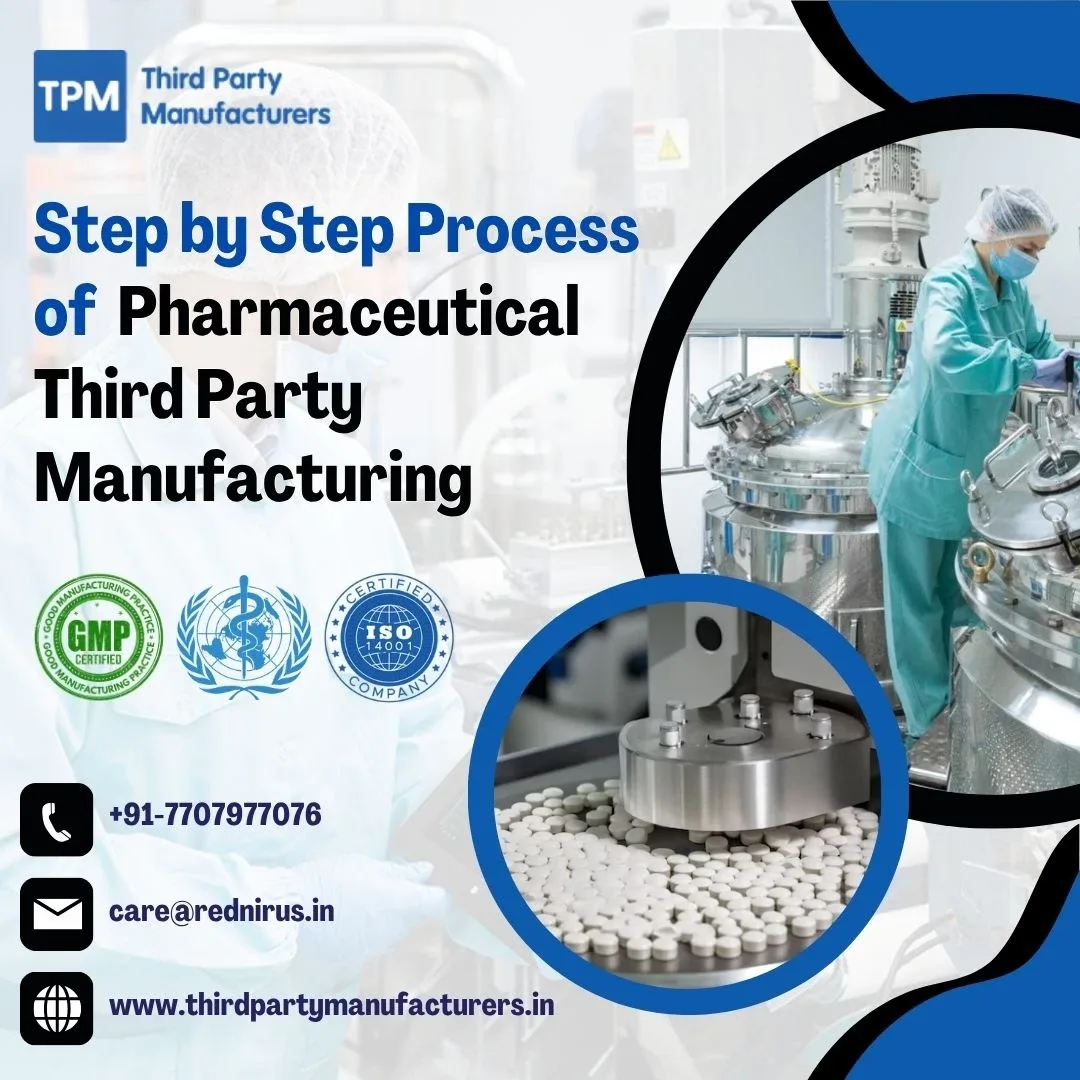
Knowing the Step by Step Process of Pharmaceutical Third Party Manufacturing matters if you want to grow in pharma without putting up a big plant of your own. The idea is simple. Another licensed company makes the medicines and you grow the business without worrying about production. It's very common in India because it costs so little compared with owning a unit. New to the trade or already selling, you should know how Third Party Pharma Manufacturing runs so you don't make the usual mistakes. Below we walk through each stage in plain words, so the way contract makers work is clear before you place an order.
What is Pharmaceutical Third Party Manufacturing and Why is It Important?
It's an arrangement where one pharma company hires another to make its medicines. The tablets, capsules or syrups come out under your brand name and to the agreed quality standards.
People also call it pharma 3rd party work or Medicine Third Party Manufacturing. Most prefer it because it cuts investment. It saves time too.
Why it matters to you.
- No need to set up your own manufacturing plant
- Saves money on machinery and labour
- More time for marketing and sales
- Access to experienced contract makers
- Good quality finished products
Put simply, you build the brand and somebody else deals with the headaches of production.
How does The Step by Step Process of Pharmaceutical Third Party Manufacturing Work?
Here is how an order moves, from the first phone call to the cartons landing at your godown.
1. Select the Right Third Party Manufacturer
Start by picking a reliable partner. Look for these points.
- WHO-GMP certified companies
- Good name in the market
- Wide product range
- Clear pricing
Your product quality rests on whichever of the Third Party Manufacturers you settle on, so take your time here.
2. Finalize Product List and Composition
Decide which products you want made.
- Tablets
- Capsules
- Syrups
- Injections
Fix the composition of each one. Then settle the packing type and the quantity, since the maker can't quote a rate per strip or bottle until those are known.
3. Documentation and Agreement
Once the list is final, get the paperwork done.
- Drug licence
- GST registration
- Company profile
Then sign a manufacturing agreement. It sets out the following.
- Product details
- Pricing
- Delivery timeline
With everything in writing, nobody can argue later about what was promised.
4. Product Sampling and Approval
Before bulk production the maker sends samples. Check each of these carefully.
- Product quality
- Packing design
- Label details
Full production starts only after you approve. Don't rush this step, because a spelling mistake on a label or the wrong shade on a carton costs far more to fix once thousands of units are already printed.
5. Manufacturing Process Begins
Once you sign off, production starts. The plant works to strict quality guidelines.
- GMP standards
- Quality control checks
- Batch testing
That's what keeps the medicines safe and effective.
6. Packaging and Branding
After manufacture, the stock is packed under your brand. Each pack carries these details.
- Printed label
- Batch number
- Manufacturing & expiry date
Now the goods are ready for the market.
7. Delivery and Distribution
The products are then dispatched to your location. From there you can move them out in several ways.
- Sell through distributors
- Supply to hospitals
- Market to retailers
That completes the cycle. Most brand owners then reorder, and the second round is always quicker.
What should You Check Before Associating Third Party Manufacturers?
Picking the right partner is half the job. Keep these points in front of you.
- Quality Certifications
- Always choose manufacturers with
- WHO-GMP certification
- ISO certification
- Product Range
A good maker should offer a broad list, so one partner can cover your tablet, capsule and syrup needs.
- Pricing and Transparency
- Check that pricing is competitive and clear. Avoid hidden charges.
- Manufacturing Capacity
- Make sure the company can handle bulk orders.
- Market Reputation
Read reviews. Talk to a client or two they've served before you finalise.
Is Third Party Pharma Manufacturing Profitable for Your Business?
Yes, it pays well if you run it properly.
The benefits are clear.
- Low investment
- High return on investment
- No need for infrastructure
- Easy to scale
- Faster market entry
Through Pharma 3rd Party Manufacturing you can build your brand while experienced people handle production.
FAQs About Pharmaceutical Third Party Manufacturing
Q1. What is Pharmaceutical Third Party Manufacturing?
Ans. A company outsources medicine production to another manufacturer and sells the goods under its own brand name.
Q2. Is Third Party Manufacturing safe?
Ans. Yes. Pick certified makers and the process is safe and follows strict quality guidelines.
Q3. What documents are required for Third Party Pharma Manufacturing?
Ans. You will need these.
- Drug licence
- GST registration
- Company details
Q4. How much investment is needed for Pharma 3rd Party Manufacturing?
Ans. Far less than a factory. It depends mostly on the product type and the quantity you order.
Conclusion
Contract making is one of the best business models in pharma right now. An entrepreneur can enter the market without spending heavily on a plant. Follow the steps above and your business runs smoothly, with good products and a firm place in the market.
Every stage counts, from choosing ISO, WHO and GMP Cert. makers to receiving the finished stock. Plan well and choose the partner carefully. Do that, and the model can give you a profitable pharma business that grows a little more with every batch you sell.
It's a smart way into the medicine trade.
Must Read: How to Verify a Reliable Pharma Third Party Manufacturing Company?
What is Pharmaceutical Third Party Manufacturing and Why is It Important?
Pharmaceutical Third Party Manufacturing- It is a business idea in which a pharmaceutical company contracts with another pharmaceutical company to manufacture its medicines. The products will be manufactured under your brand name, adhering to quality standards. Pharmaceutical Third Party Manufacturing is a concept by which manufacturers are able to grow their business without worrying about the production of the products.
Step by Step Process of Pharmaceutical Third Party Manufacturing is vital for those who are interested in expanding their business in the pharmaceutical industry without setting up large-scale manufacturing units. Pharmaceutical Third Party Manufacturing is a concept by which manufacturers are able to grow their business without worrying about the production of the products. It is a highly common concept in India due to the cost-effectiveness of the process. Whether you are a new entrant into the pharmaceutical industry or an existing player, it is vital to know the process of Third Party Pharma Manufacturing to avoid common blunders. In this blog, we would like to walk you through the proce...
Key takeaways
- What is Pharmaceutical Third Party Manufacturing and Why is It Important?
- How does The Step by Step Process of Pharmaceutical Third Party Manufacturing Work?
- What should You Check Before Associating Third Party Manufacturers?
- Is Third Party Pharma Manufacturing Profitable for Your Business?
- FAQs About Pharmaceutical Third Party Manufacturing
How to order Step by Step Process of Pharmaceutical Third Party Manufacturing
- Define the product Fix the composition, dosage form, pack size, quantity and your brand name.
- Shortlist manufacturers Compare WHO-GMP certification, product permission, capacity and location.
- Compare quotations Ask for the per-unit rate, MOQ, lead time and packing material cost in writing.
- Approve artwork and sample Finalise label, carton and MRP, and approve the pre-production sample.
- Receive your batch Pay the agreed advance and receive goods with invoice and certificate of analysis.