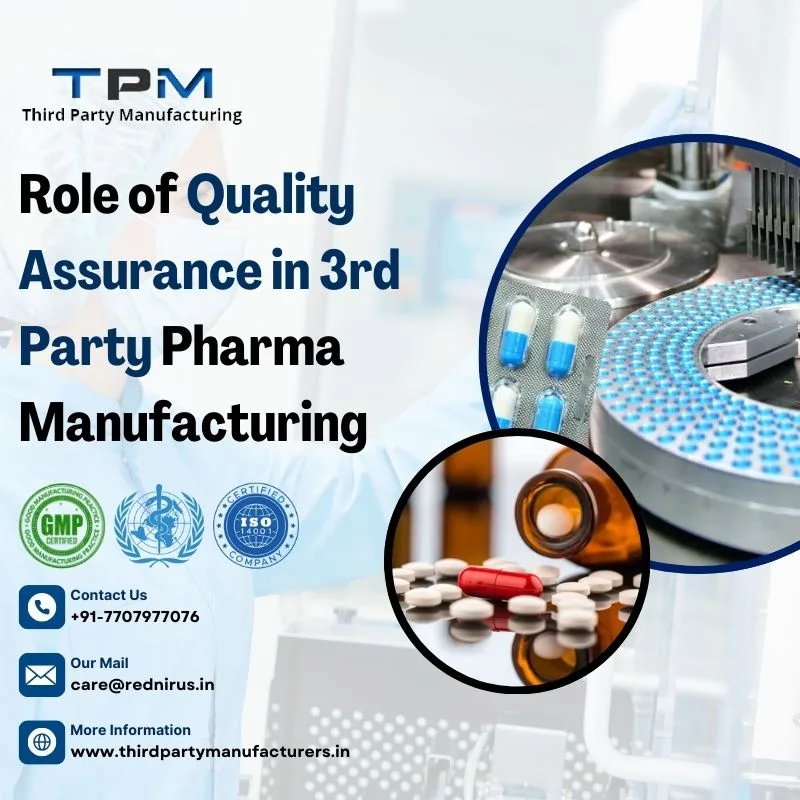
Pharma manufacturing moves fast. A product that wants to last in the market has to meet high quality standards, every batch, every time. That is where the role of quality assurance in 3rd party pharma manufacturing comes in. QA is what makes a medicine safe and effective. It also helps pharma companies meet regulatory demands and protect their brand names. In this blog we look at why QA matters so much in contract manufacturing, and how it shapes the whole process from “this does not taste right” to “that looks just right.”
What is 3rd Party Pharma Manufacturing?
Before getting into QA, it helps to be clear on what third party manufacturing is. A Third Party Manufacturing Pharma Company makes medicines for another brand or company. The brand owner outsources production to this outside unit, usually called the third party medicine manufacturer or contract manufacturing firm.
The arrangement is common because it frees pharma companies to spend their time on other parts of the business, mainly marketing and sales. Production goes to specialists.
Why is Quality Assurance Important in 3rd Party Manufacturing?
QA matters in contract pharma work for several reasons. It is how you know the final tablet or syrup is safe, that it works and that it matches every specification. The main reasons, one by one:
1. Ensuring Compliance with Regulatory Standards
The drug industry is heavily regulated. Medicines have to follow strict guidelines from authorities such as the FDA (U.S. Food and Drug Administration) and the EMA (European Medicines Agency), as well as many national regulators. Drug safety is governed by rules at national and international level, and whether it's a pharmaceutical contract manufacturing project or routine 3rd party manufacturing, a company has to follow those norms so the medicine is safe for the patient.
Contract makers must stick to every regulation. QA is how they do it. QA specialists check every detail of production, from raw material supply right up to the finished product, against current Good Manufacturing Practices (cGMP).
2. Ensuring Safety and Effectiveness of Products
The heart of quality assurance is making sure a pharma product is safe and does its job. In contract manufacturing, QA teams inspect and test products regularly so they meet the highest safety standards. They might be checking the potency of a drug, or confirming there are no contaminants in a batch. Either way, the aim is the same: the product has to work as intended.
This matters even more in contract arrangements. The product made here may be sold under another company's brand. If something goes wrong, the brand owner takes serious damage to its name, and legal trouble too, even though it never ran the production line. Consistent quality at every step becomes a shared responsibility.
3. Minimize the Risk of Defects
In the drug business even a small defect, like a wrong label, can end badly. Wrong labels and contamination happen more often than anyone would like. Worst of all is an outright manufacturing error.
A well-designed QA system spots these risks early in production. Continuous testing, process validation and inspection catch defects before the product reaches the market, so fewer bad products slip into the supply chain. It protects the name of both Third Party Medicine Manufacturers and the brand owners they supply.
Key Roles of Quality Assurance in Third Party Manufacturing
1. Process Validation
Before production starts, the contract unit has to validate its processes. The point is to prove that the equipment and procedures can turn out good products consistently. QA staff confirm the methods used match the required standards.
2. Raw Material Inspection
A product is only as good as its raw material. QA personnel allow only good-quality ingredients into production, so every batch of incoming raw material is examined before it is used. That keeps out contamination and stops substandard components from being used.
3. Production Monitoring
During manufacturing, QA teams keep the process under constant watch. That covers calibration of equipment and in-process testing, along with sticking to the standard at each production step. If something drifts from the standard, it is corrected before it can affect the product.
4. Final Product Testing and Inspection
Once made, the product goes through thorough testing. QA checks potency and purity and the overall quality of the finished goods. They also inspect the packing and the label closely, to confirm both are accurate and meet regulatory requirements.
5. Documentation and Reporting
Proper records are a core part of QA in Pharmaceutical Contract Manufacturing. Each stage, from buying raw material and testing through to final production, is written up in detail. These records trace the product's path through the plant and show it met the regulatory standards along the way.
How Quality Assurance Benefits Third Party Pharma Manufacturing?
QA brings plenty of benefits to contract makers and to the pharma business as a whole. Here they are:
1. Gaining Confidence among Consumers and Business Partners
When quality is guaranteed, the contract maker earns the trust of the pharma company it works for. Patients feel secure too. Anyone taking a medicine needs it to be safe and to work.
2. Mitigating Legal Risks
Strict QA practices help pharma companies stay clear of litigation and product recalls. What gets delivered meets the legal requirements, so the chances of non-compliance are small.
3. Retain Brand Reputation
A Third Party Manufacturing Company that makes good products keeps the reputation of the brand it supplies intact. One bad product can wreck a company's name. Good QA stops that from happening.
Conclusion
Quality assurance sits at the centre of third party pharma manufacturing. It is what keeps medicines safe and effective, and compliant with every regulatory standard. From raw material inspection to testing of the final batch, QA cuts down defects and reduces risk, and it builds trust in the product as well as the brand. In contract manufacturing of any kind, the companies that put QA first will keep turning out good medicines that help patients and the wider healthcare community.
What is 3rd Party Pharma Manufacturing?
Before detailing the quality assurance role, some find it pertinent to understand what third party manufacturing is. Third Party Manufacturing Pharma Company is a company that manufactures medicines for another brand or company. The owner of the brand outsources the production to a third party, usually known as the third party medicine manufacturer or contract manufacturing firm.
The world of pharma manufacturing is fast-paced. For a product to survive competition in the market, high standards of quality must be covered. Quality Assurance 3rd party pharma manufacturing is significant in this regard. Quality assurance ensures that medicines are safe and have efficacy. In doing so, it assists pharmaceutical companies meet up their regulatory demands and protect their ‘brand names’. This blog shall cover the importance of QA in third-party manufacturing, which is predominantly located in pharma contract manufacturing, and its implications on the whole process from “this does not taste” to “that looks just right.” Before detailing the quality assurance role, some find it...
Key takeaways
- What is 3rd Party Pharma Manufacturing?
- Why is Quality Assurance Important in 3rd Party Manufacturing?
- Key Roles of Quality Assurance in Third Party Manufacturing
- How Quality Assurance Benefits Third Party Pharma Manufacturing?
By the numbers
- India has the highest number of US-FDA compliant manufacturing facilities outside the United States — Invest India, Government of India
- The Indian pharmaceutical market is projected to reach US$ 130 billion by 2030 — IBEF
How to order Role of Quality Assurance in 3rd Party Pharma Manufacturing
- Define the product Fix the composition, dosage form, pack size, quantity and your brand name.
- Shortlist manufacturers Compare WHO-GMP certification, product permission, capacity and location.
- Compare quotations Ask for the per-unit rate, MOQ, lead time and packing material cost in writing.
- Approve artwork and sample Finalise label, carton and MRP, and approve the pre-production sample.
- Receive your batch Pay the agreed advance and receive goods with invoice and certificate of analysis.