Third Party Drug Manufacturing Companies do a big job in pharma. They let a business outsource production and put its own effort into branding and marketing. Their pricing is flexible and built to suit almost any kind of buyer, from a startup to a pharma brand that's been around for years. If you understand how these companies price their work, you'll make better choices and keep more profit.
Contract manufacturing has become a popular way to cut costs and work more efficiently in a crowded market. Prices change with production volume and the type of product, and packing and regulatory compliance also move the number. You may be about to use Third Party Manufacturing services for the first time, or you may be growing an existing business. Either way, knowing how the pricing works helps you negotiate harder and still hold quality. Below we go through the main pricing structures used in this trade.
Understanding Pricing Models in Third Party Manufacturing Pharma Companies
Before you pick a partner, find out how they price. The model decides what you pay and what's included in the package.
1. Cost-Plus Pricing Model
This is one of the most common models in Pharmaceutical Third Party Manufacturing. The maker works out the total cost of production and adds a fixed profit margin on top.
What goes into the cost
- Raw material cost
- Labour charges
- Packaging cost
- Overhead expenses
It's open and easy to follow. That makes it a good fit if this is your first contract manufacturing deal.
2. Fixed Pricing Model
Here the company quotes one fixed price for making a particular product. Small swings in raw material cost don't change that price.
Why buyers like it
- You can predict your budget
- Financial planning gets easier
- There are no hidden costs
The catch is that a fixed price can be a little higher, because the maker builds its own risk into the quote.
Main Pricing Models Explained in Pharmaceutical Contract Manufacturing
To really understand Pharmaceutical Contract Manufacturing, you have to look at what drives the price, and the biggest driver is the scale of production.
3. Volume-Based Pricing Model
Drug makers use this one a lot. The more you order, the less you pay per unit.
Where it helps
- Bulk orders cost less
- Your margins get better
- It suits pharma businesses that are already established
For example, an order of 10,000 units will cost less per unit than an order of 1,000 units.
4. Per Unit Pricing Model
The company charges a fixed rate for every unit it produces. It's simple, and you'll see it often in this trade.
Works best for
- Small businesses
- Startups
- Trial product launches
You keep control of costs without tying yourself to big production runs.
Additional Cost Factors in Third Party Manufacturing Pharmaceuticals
The pricing model is only part of the bill. A few other things change what you finally pay.
1. Product Complexity
A complex formulation needs more advanced technology and more labour, so it costs more. Different types of medicine carry different prices.
2. Packaging Requirements
Premium or custom packing adds to the cost. Many Third Party Manufacturing Pharma Companies give flexible packing options to match different budgets.
3. Regulatory Compliance
Compliance pushes the price up. It's also what keeps the medicines coming out of a contract plant at a high standard.
4. Research and Development
If the maker helps develop the product, expect R&D charges on top. This is common with the more innovative companies.
Choosing the Right Pricing Model in 3rd Party Manufacturing Pharmaceuticals
Base the choice on your goals and your budget.
For Startups
A new company getting into contract manufacturing should look at:
- Per unit pricing
- Cost-plus pricing
Both give you flexibility, and the money you have to put in at the start is lower.
For Established Businesses
A company with a solid place in the market can gain from:
- Volume-based pricing
- Fixed pricing contracts
These bring long term costs down and make it easier to scale.
For Custom Products
If you're working on a special formulation, cost-plus pricing suits you better, since you can see exactly what you're paying for.
FAQs on Pricing Models of Third Party Drug Manufacturing Companies
Q1. What Pricing Model Is Commonly Used By Third Party Drug Manufacturing Companies?
Cost-plus is the most common. It is the production cost plus a fixed margin, and it keeps things flexible for anyone in this line of business.
Q2. How Can I Minimize Costs in Pharmaceutical Contract Manufacturing?
Order in bulk and stick to standard packs. It also pays to deal with experienced makers who charge fair rates.
Q3. Does Volume Pricing Work Well in 3rd Party Manufacturing Pharmaceuticals?
Yes, because it brings the unit cost down. It works best for companies with high demand.
Conclusion
Any decision about running a pharma company should take into account how ISO and GMP certified Third Party Drug Manufacturing Companies set their prices. Cost-based, fixed, per unit or volume pricing: each has its plus points and its drawbacks, and which one wins depends on the size and goals of your company.
These makers offer flexible pricing that can work for a new venture as well as a well established firm. It also lets you weigh up every cost in the production and packing stages.
The Pharmaceutical Contract Manufacturing market keeps changing, so you need the pricing approach that fits your venture best. Choose carefully, and only work with makers you can trust.
Must Read: What are the Common Challenges in Injection Manufacturing?
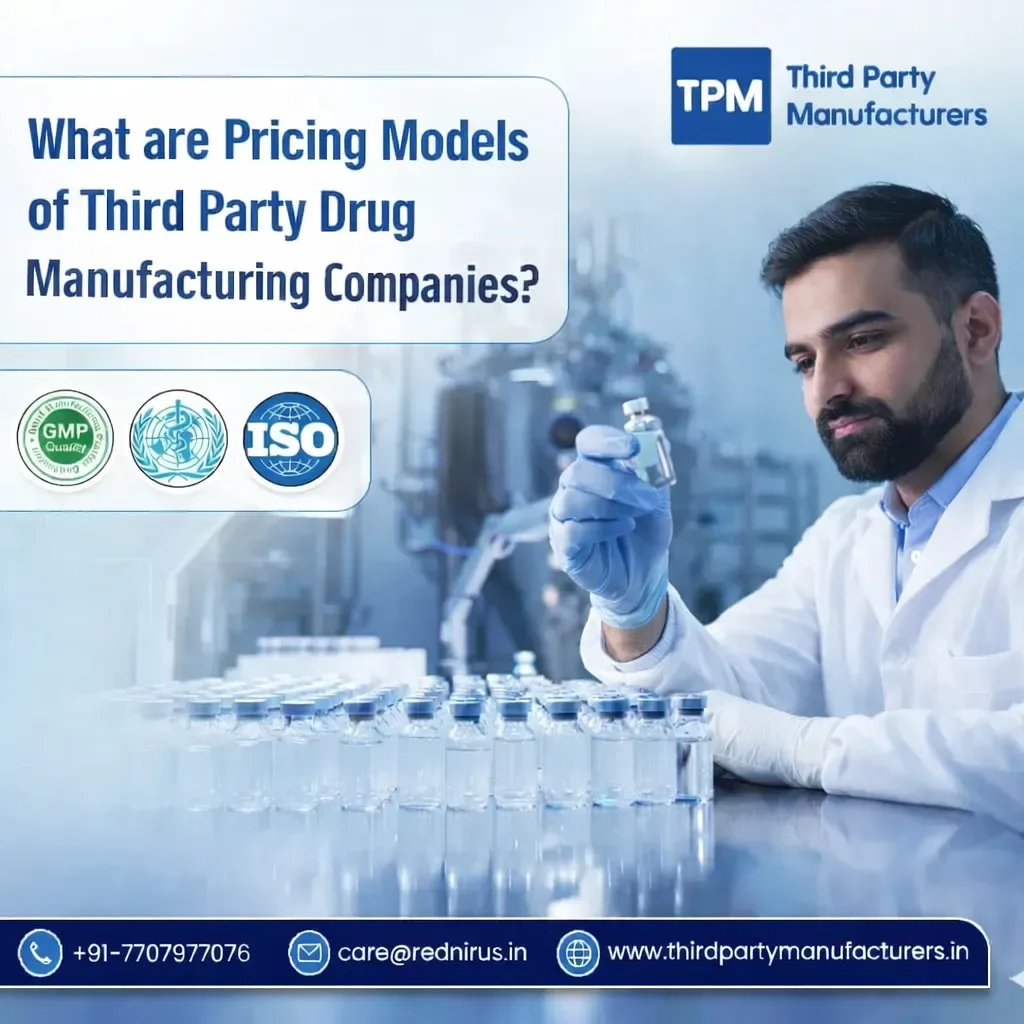
What are Pricing Models of Third Party Drug Manufacturing Companies?
Third Party Drug Manufacturing Companies have a significant part to play in the pharmaceutical industry by allowing businesses to benefit from outsourcing and branding and marketing. The pricing structures are flexible and are designed to meet business requirements of any type whether startups or existing pharma brands.
Third Party Drug Manufacturing Companies have a significant part to play in the pharmaceutical industry by allowing businesses to benefit from outsourcing and branding and marketing. The pricing structures are flexible and are designed to meet business requirements of any type whether startups or existing pharma brands. An insight into the pricing structures of Third Party Manufacturing Pharma Companies will help make the right choices for achieving maximum profits. Pharmaceutical Contract Manufacturing is becoming a popular way of reducing costs and enhancing efficiency in the highly competitive scenario today. The pricing structure varies depending upon production volume, type of products...
Key takeaways
- Understanding Pricing Models in Third Party Manufacturing Pharma Companies
- Additional Cost Factors in Third Party Manufacturing Pharmaceuticals
- Choosing the Right Pricing Model in 3rd Party Manufacturing Pharmaceuticals
- FAQs on Pricing Models of Third Party Drug Manufacturing Companies
How to order What are Pricing Models of Third Party Drug Manufacturing Companies?
- Define the product Fix the composition, dosage form, pack size, quantity and your brand name.
- Shortlist manufacturers Compare WHO-GMP certification, product permission, capacity and location.
- Compare quotations Ask for the per-unit rate, MOQ, lead time and packing material cost in writing.
- Approve artwork and sample Finalise label, carton and MRP, and approve the pre-production sample.
- Receive your batch Pay the agreed advance and receive goods with invoice and certificate of analysis.